Qigong Sensory Treatment
Touch as a gateway to development in autism - A new path for autism research
Developed by Dr. Louisa Silva
Presented by Sabine Baeyens | Make Children Better® – Belgium
You’ve reached this page because you’re curious about the role of structured touch in autism. Welcome.
🧠 rethinking autism through the skin
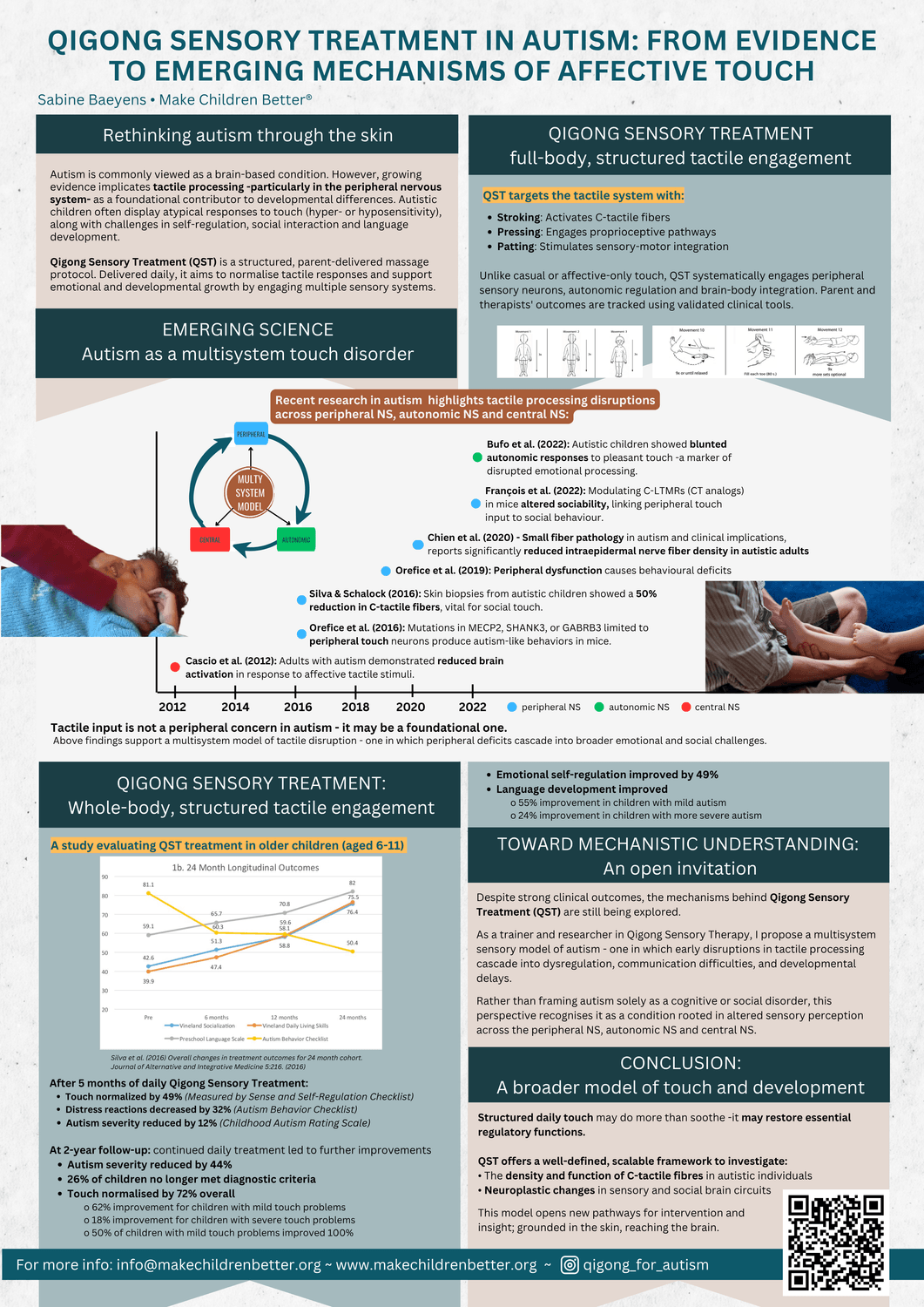
Autism is widely viewed as a brain-based condition, but increasing evidence points to disrupted tactile processing - especially in the peripheral nervous system - as a foundational contributor to developmental delay.
Qigong Sensory Treatment (QST) is a daily, parent-delivered massage protocol designed to normalise sensory responses, improve self-regulation and support emotional and language development. It is one of the only touch-based interventions for autism supported by:
Two randomized controlled trials
Longitudinal follow-up studies (1–2 years)
Biological evidence — including skin biopsies showing CT fiber loss
QST directly engages the peripheral nervous system and proposes a model of autism not solely as a cognitive or social disorder, but as a multisystem sensory condition grounded in touch.
📊 Key Outcomes
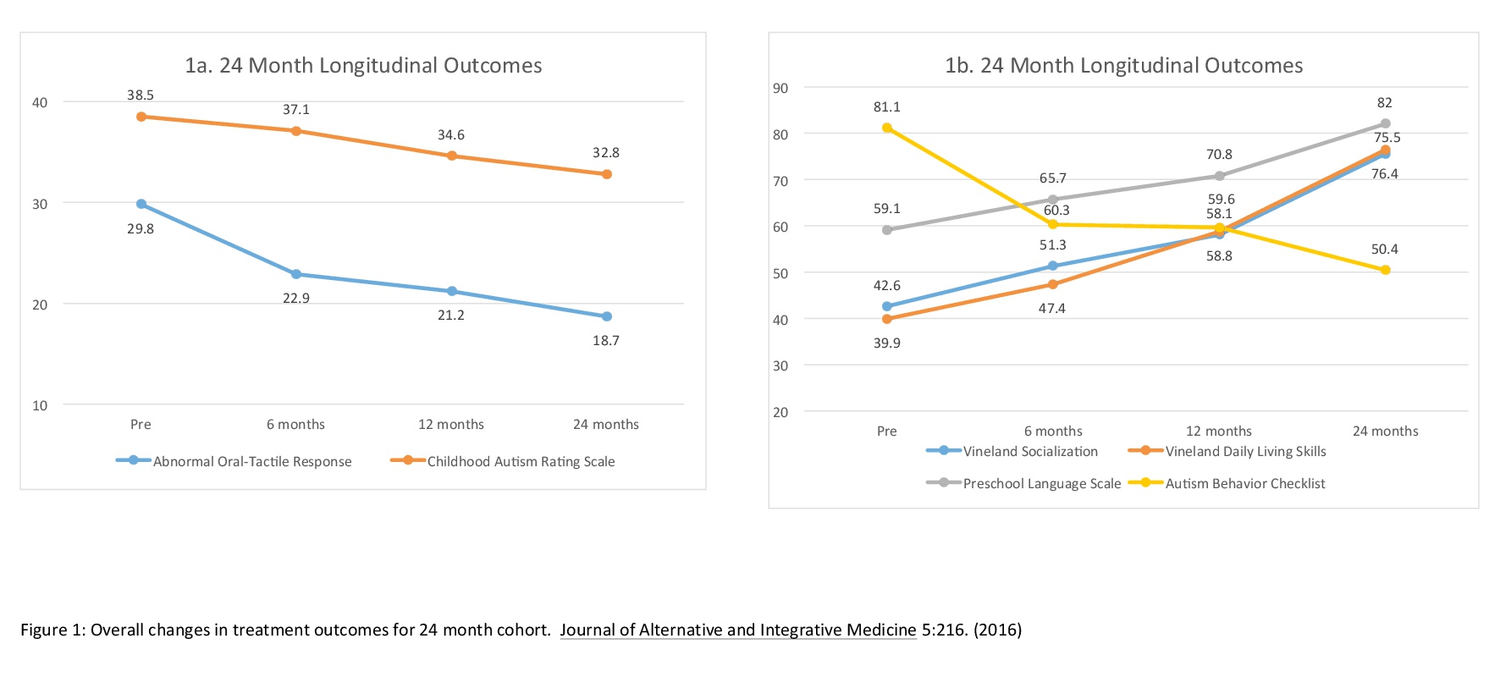
After 5 months of daily Qigong Sensory Treatment:
Touch normalized by 49% (Measured by Sense and Self-Regulation Checklist)
Distress reactions decreased by 32% (Autism Behavior Checklist)
Autism severity reduced by 12% (Childhood Autism Rating Scale)
At 2-year follow-up: continued daily treatment led to further improvements
Autism severity reduced by 44%
26% of children no longer met diagnostic criteria
Touch normalised by 72% overall
o 62% improvement for children with mild touch problems
o 18% improvement for children with severe touch problems
o 50% of children with mild touch problems improved 100%
Emotional self-regulation improved by 49%
Language development improved
o 55% improvement in children with mild autism
o 24% improvement in children with more severe autism
🧬 Mechanistic Insights
Recent research supports a multisystem model of autism involving:
Peripheral dysfunction (loss of C-tactile fibers)
Autonomic disregulation (blunted vagal tone)
Central hypo-activation (reduced social touch processing)
QST provides a unique model to investigate how daily structured touch can recalibrate the sensory-autonomic-social axis.
⚠️ QST vs. other touch-based approaches
Unlike massage therapy, brushing protocols, sensory integration therapies or shiatsu -which have limited peer-reviewed research on long-term developmental change;
QST stands out for its:
Standardised, parent-delivered protocol
Multiple published studies, including randomized controlled trials and follow-ups
Exploration of physiological mechanisms, including sensory nerve fiber density
🧪 QST is currently the only touch-based autism intervention with published research investigating skin innervation and CT fiber loss in the autistic population.
Other approaches may impact the sensory system, but have not yet been studied at the structural nerve level.
📂 Download the Research Summary (PDF)
📥 Download the Research Summary (PDF)
🧾 A 3-page, research-focused overview including:
What QST is and how it works
Summary of published findings (RCTs, follow-ups, CT fiber loss)
A model of autism rooted in sensory systems, not just brain function
Future research questions (CT density, vagal tone, brain plasticity)
Full reference list of 20+ QST studies
Enter your email address.
🤝 help advance the science of touch-based interventions for autism
Qigong Sensory Treatment (QST) is supported by strong clinical outcomes - but how it works, at a mechanistic level, remains an open and vital question. We invite collaboration with researchers interested in deepening our understanding of:
🔬 Mechanistic Pathways to Explore
Peripheral Sensory Function
Structure and density of C-tactile fibers (via skin biopsy, microneurography)
Changes in somatosensory thresholds and sensitivity
Autonomic Nervous System
Heart rate variability (HRV), skin conductance, vagal tone
Relationship between autonomic state and emotional regulation
Central Nervous System
Neuroimaging (fMRI, EEG) to observe brain response to structured touch
Connectivity and plasticity in sensory-social circuits
Neuroimmune & Endocrine Axes
Touch as a modulator of cortisol, oxytocin and inflammatory markers
Developmental Trajectories
Longitudinal studies on sensory integration, language and social behaviour
Subgroup analyses (mild vs. severe ASD, age, gender)
🧠 why qst is a unique research platform
Clearly defined intervention protocol
Demonstrated clinical effects in over 700 children
Engages multiple sensory and regulatory systems
Scalable, parent-delivered, real-world applicability
Validated clinical tools available for tracking Parent and therapists' outcomes
Let’s connect:
📧 Email us at info@makechildrenbetter.org to collaborate or request materials.